How to Do a Dumbbell Row: Form, Cues and Common Mistakes
By Anna · Updated November 2026 · 8 min read
The one-arm dumbbell row is the most approachable pulling exercise there is. A bench, one dumbbell and a flat back are all you need to build the mid-back that balances all the pushing most people do. Done well, it trains the lats and shoulder blades; done poorly, it turns into a bicep curl with a twist, and the back you were trying to build barely gets involved.
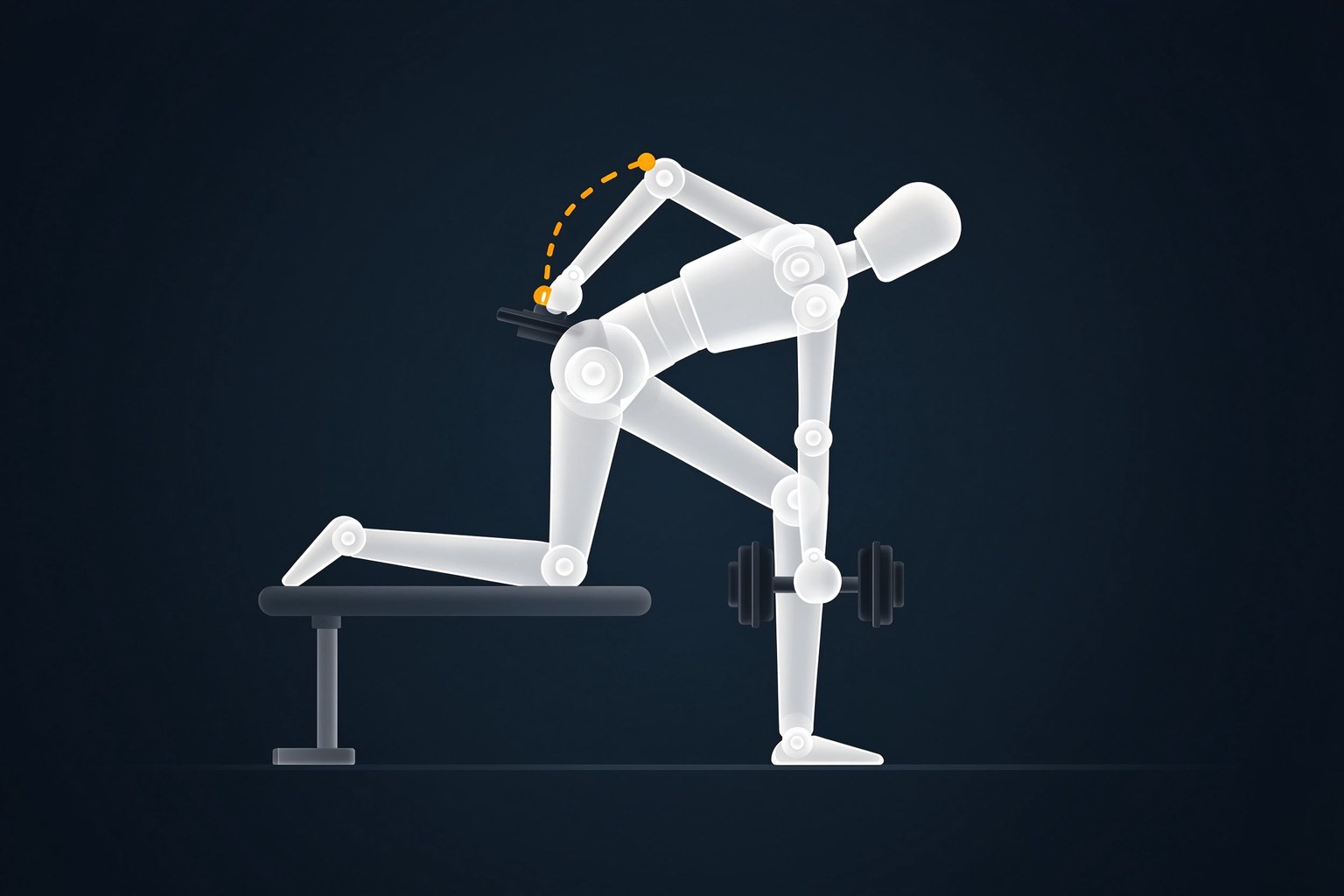
Set up the support before you touch the weight
Most row faults come from the setup, not the pull. Place one knee and the same-side hand squarely on the bench, so your torso is roughly parallel to the floor and your back is flat. The opposite foot stays planted on the floor to stabilise the hip. Let the free arm hang straight down from the shoulder, dumbbell in hand, with the shoulder relaxed but not slumped.
Check two things before the first rep: your back is neutral rather than rounded, and your hips are level rather than dropping on the free side. If you cannot hold that position with an empty dumbbell, the bench placement or the load needs adjusting first.
The movement, step by step
- 1. Brace the flat back. Take a small breath and keep the torso still. The row should move the elbow, not rotate the spine.
- 2. Drive the elbow back and up. Think of pushing the elbow toward the ceiling behind you, keeping it close to your side. The dumbbell follows; you are not leading with the hand.
- 3. Squeeze the shoulder blade. At the top, pull the shoulder blade back and down for a brief pause. That squeeze is what trains the mid-back; without it the rep barely counts.
- 4. Lower under control. Let the arm extend fully on the way down, opening the shoulder blade each rep, but keep the back flat. Do not drop the dumbbell at the bottom.
The mistakes that make it a bicep exercise
| What happens | Cause | Fix |
|---|---|---|
| You curl the dumbbell up | Leading with the hand instead of driving the elbow back | Cue "elbow to the ceiling"; keep the wrist neutral through the rep |
| Torso twists on each rep | Bench support too far away, or weight too heavy | Square the hand and knee on the bench; reduce the load until the hip stays level |
| Elbow flies out wide | Trying to pull toward the chest rather than the hip | Keep the elbow near the side; row to the lower ribs, not the collarbone |
| Shoulder shrugs up | Trapezius compensating, or the arm hanging in a slumped position | Set the shoulder down before pulling; keep it away from the ear all set |
| No pause at the top | Rushing reps to finish the set | Hold the squeeze for a beat; if you cannot, the weight is too heavy |
Sets, reps and progression
Three sets of 8–12 reps per side works for most people. Leave a rep or two in reserve on every set so the back stays braced and the last reps do not turn into swinging. When you can complete the top of the rep range with clean form on both sides, add a small amount of dumbbell weight next session. Track the reps and weight per side; a weak side that lags behind should catch up before the load climbs further.
Where the row fits in a routine
Pulling work balances the pushing you do on the bench and overhead press, so pair rows with a press on upper-body days. In the muscle-building plan it sits alongside vertical pulling; if you are working toward your first pull-up, the row builds the same back strength from a supported position. It also complements the hip hinge you practise in the deadlift, and it fits naturally into the men's split on back-and-bicep day.
Frequently asked questions
What muscle does the dumbbell row work?
Mainly the mid-back — lats, rhomboids and middle traps — with biceps and rear delts assisting. If you feel it only in your arms, you are curling rather than rowing.
Row to the hip or the chest?
To the lower ribs, elbow close to the side. A high elbow pulled toward the chest shifts the emphasis onto the shoulders and changes the angle.
Can I row without a bench?
Yes. A bent-over two-dumbbell row with a hinged torso works, but it demands more trunk stability. If your back rounds, use a bench or a sturdy table until the hinge position holds.
Written by
Anna
Yoga & Pilates instructor since 2010, Fitness Yoga Level 6, postnatal recovery specialist. Full credentials →