A Workout Routine for Skinny Guys Who Struggle to Gain Weight
By Anna · Updated November 2026 · 10 min read
Being naturally slim is not a fault you have to train around, but it does mean the usual "lift hard and eat well" advice leaves a lot of hardgainers stuck at the same body weight for years. The trainees who actually grow are not the ones who spend the most hours in the gym. They are the ones who train a handful of focused sessions, eat a little more than they burn, and keep adding load over time. This routine is built around those three levers.
Why skinny trainees stay that way
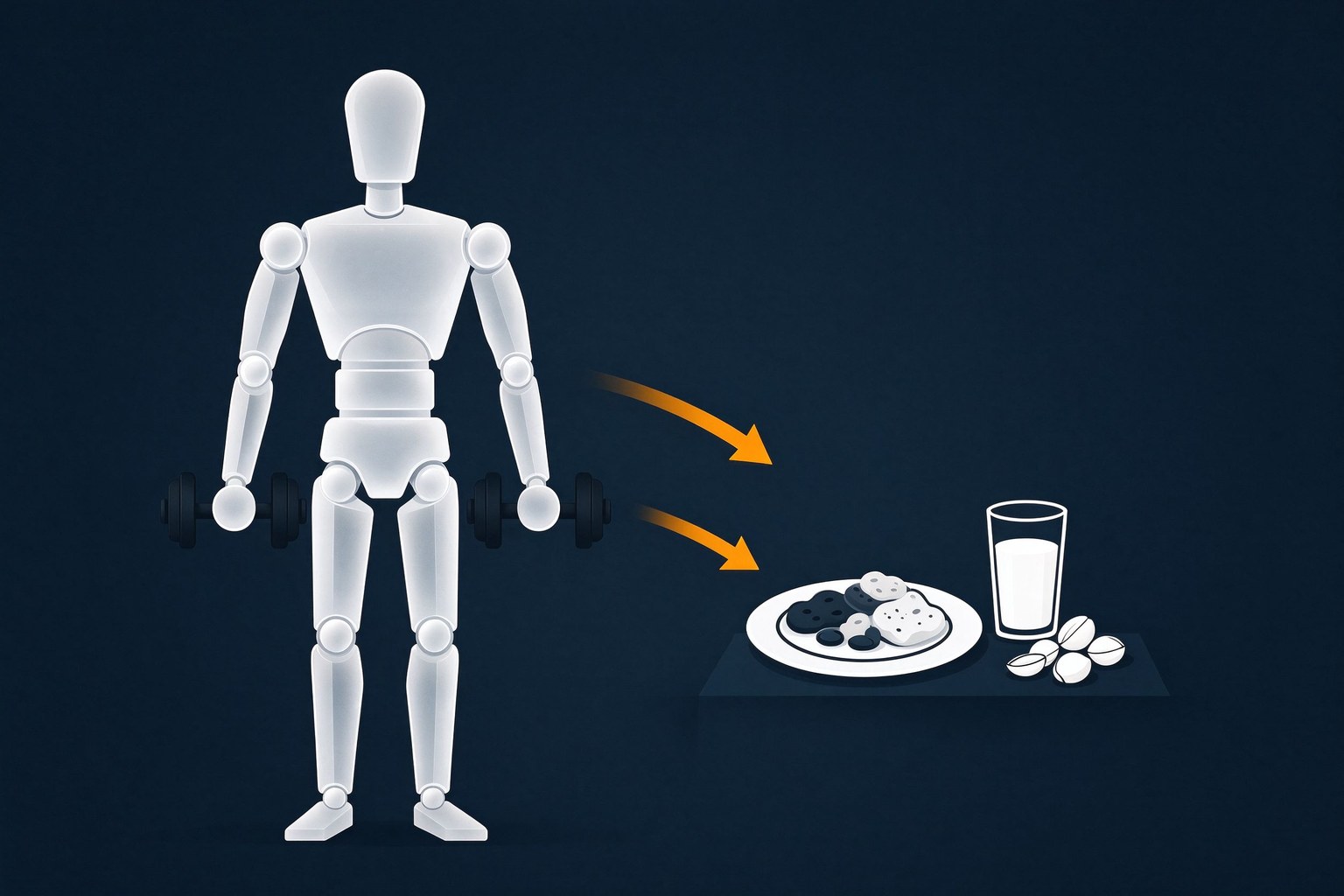
Most people who describe themselves as hardgainers share one of two patterns. Either their daily activity is high — walking, standing, fidgeting, moving around a lot — so their total calorie burn climbs faster than they notice, or they simply do not fit in enough food across the day. Training is rarely the missing piece. A light four-session week with adequate food will outgrow a tiring six-day split that does not fuel recovery.
The other trap is doing too much isolation work. Bicep curls and shoulder raises have their place, but for someone starting out, the big compound lifts are what stimulate the most muscle and allow the most load to progress over time. Build the base with those first.
The four-day split
An upper/lower split hits every muscle group roughly twice a week, which is the frequency most growth research supports, while leaving room to recover. Session lengths stay around 60–75 minutes.
| Day | Focus | Working lifts | Sets × reps |
|---|---|---|---|
| Monday | Upper A | Bench press, dumbbell row, overhead press, pull-up or band-assisted pull-up | 3 × 8–10 |
| Tuesday | Lower A | Barbell squat, Romanian deadlift or dumbbell deadlift, walking lunge | 3 × 8–10 |
| Wednesday | Rest / walk | Light activity, no structured lifting | — |
| Thursday | Upper B | Incline dumbbell press, dumbbell row, lat pulldown or assisted pull-up, lateral raise | 3 × 8–12 |
| Friday | Lower B | Deadlift, leg press or heel-elevated squat, calf raise | 3 × 6–10 |
| Sat–Sun | Rest / light | One easy walk; sleep and food are the priority | — |
If four sessions do not fit the week, run the Monday, Tuesday, Thursday and Friday sessions as three full-body days instead. The lifts stay the same.
Progressive overload: the rule that actually builds size
Muscle grows when it is asked to do slightly more than it did last time. That means tracking the weight and reps for each lift, and adding a little load or one extra rep when the top of the rep range feels controlled. A squat you lifted easily for three weeks at the same weight is no longer a stimulus. This logbook matters more than the split itself — a simple version lives in your phone notes.
The eating side, where most hardgainers fail
You cannot build muscle from a deficit. To gain, you need a small calorie surplus and enough protein to repair the work. A practical target is 1.6–2.2 g of protein per kilogram of body weight per day, spread across meals, with the rest of the food coming from the carbohydrates and fats that fuel your sessions. Our guide on how much protein you actually need walks through the per-meal split in detail.
- Eat on a schedule, not when hungry. Slim trainees often do not feel like eating. Three main meals plus a snack or shake between them beats waiting until you are hungry, which rarely happens enough in a day.
- Add calorie-dense food. Nuts, nut butter, whole milk, rice, oats, eggs and olive oil are easier to eat in volume than large amounts of vegetables and lean meat.
- Weigh yourself weekly. Same time, same clothes. If the average does not rise over three to four weeks, add a meal or a snack rather than training harder.
- Protect sleep. Muscle is repaired during recovery. Short nights quietly cancel a fair amount of the training you did that week.
Common mistakes that keep you stuck
- Training six days a week and under-eating. More sessions without fuel just add fatigue. The four-day plan above is deliberate, not a placeholder.
- Chasing isolation exercises. Curls and raises do not build a base; the squat, hinge, press and row do those jobs first.
- Changing the program every two weeks. A lift needs enough sessions to show whether the load can progress. Give a plan eight to twelve weeks before judging it.
Frequently asked questions
Why do I stay skinny even though I lift?
Most likely food rather than training. If your weight holds steady for three to four weeks, you are not eating enough total calories. Fix the surplus before adding another session.
How fast should I gain?
About 0.25–0.5 kg a week. Faster early gains tend to be mostly fat; a slow steady climb means the weight you add is largely muscle.
Do I need weight-gainer shakes?
No. They are a convenience for hitting a calorie target when solid food is hard to fit in. Ordinary meals come first; shakes cannot replace training or sleep.
Written by
Anna
Yoga & Pilates instructor since 2010, Fitness Yoga Level 6, postnatal recovery specialist. Full credentials →